Blog
AI Coding's Consolidation Trap: Winners Crowned, Problems Unsolved
Cursor's $60B exit signals market maturity, but the week's security flaws and quality concerns reveal developers are shipping code they can't explain. Consolidation is outpacing the hard work of making AI agents trustworthy.
The Developer Bifurcation: Agents vs Obsolescence
The AI tooling split is real. Developers building agent orchestration and system design thrive. Those still writing code like it's 2024 face irrelevance. The winners aren't faster coders. They're architects.
AI Tooling's Stack Wars: Who Controls the Layer
The AI developer tools market is consolidating around control of the stack, not features. Hardware vendors and mega-cap acquirers are racing to own compute or distribution, leaving independent builders with shrinking margins.
AI Agents in Production: Security Lags Behind Speed
AI agents are moving from chat into production workflows, but security infrastructure hasn't kept pace. Developers face a critical gap between capability and verification.
AI Coding Splits: Guided Tools Win, Agents Risk
The AI coding market is fracturing into two competing visions: guided, human-in-the-loop platforms winning developer trust versus autonomous agents operating outside oversight. The $60B Cursor acquisition signals capital's bet on control.
AI Agent Pricing Flips: Flat Rates Win
The infrastructure for AI agents is consolidating around open-weight models and flat-rate pricing. Developers are voting with their feet for predictability over vendor lock-in.
AI Coding's Cost Reckoning: Benchmarks and Billing
The AI coding market is consolidating around cost control and honest evaluation. After years of hype, developers now face real billing friction and the industry is scrambling to build metering, caps, and benchmarks that actually measure what these tools can do.
AI Coding's Consolidation Trap: Benchmarks Lie, Workflows Break
The AI coding market is consolidating around mega-deals and benchmark theater while developer experience remains fragmented. Elon Musk's $60B Cursor acquisition signals a strategic shift away from productivity tools toward infrastructure plays.
Agentic AI Moves Into Production. Governance Doesn't.
Agentic AI builders are proliferating, but developers are adopting agent tools faster than organizations can govern them. The real friction emerges between "we can build agents" and "we can safely operate them at scale."
AI Tooling Matured. Developer Culture Hasn't.
Infrastructure for AI-assisted development is production-ready. But developers still don't know what "vibe coding" means or who owns the output. The real tension isn't capability-it's adoption.
Agent Infrastructure Outpaces Productivity Gains
AI agent tooling is maturing fast, but the productivity payoff remains elusive. Developers now have cheaper models, structured specs, and governance layers. What they don't have yet: proof agents actually move the needle on velocity.
Hardware Signals AI Agents Are Now Production Tools
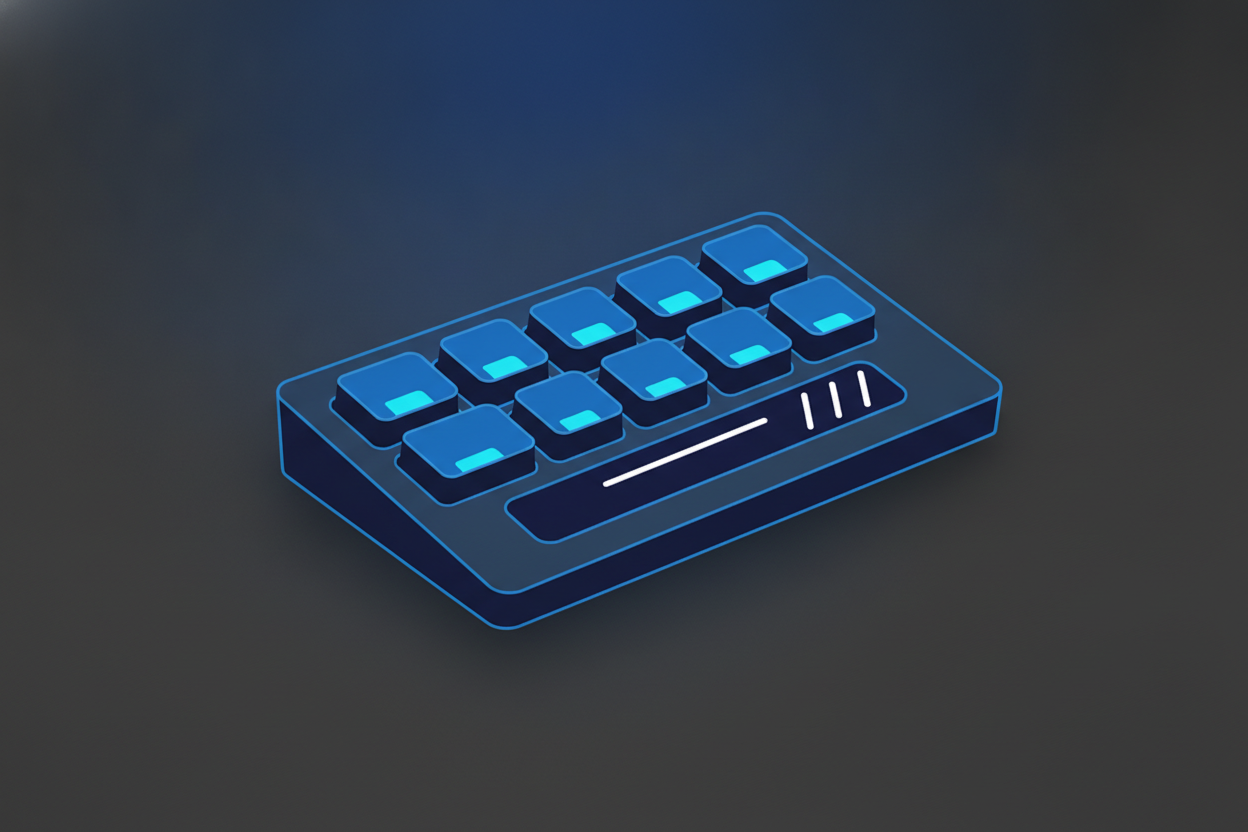
OpenAI's Codex Micro keyboard marks a critical shift: AI coding agents are moving from chat interfaces to embedded infrastructure. Hardware integration signals the industry is past the "AI as chatbot" phase.
AI Code's Governance Crisis: Benchmarks Lie, Production Breaks
AI agents dominate benchmarks but fail in production. 22% of merged code is AI-authored, yet teams lack review standards. The next wave separates winners from the rest by solving governance, not coding.
Vibe Coding's Speed Hides a Governance Crisis
Vibe coding delivers real productivity gains and lowers barriers to entry. But velocity without visibility creates risk. Teams celebrating faster shipping need to ask harder questions about what they're actually shipping.
AI Agents Are Production Now. Security Isn't.
Autonomous agents are shipping to production faster than security models can catch up. Prompt injection, credential theft, and framework vulnerabilities are the new attack surface. The developer community is still treating agents like toys.
The Merge Contract Is Broken: AI Speed Outpaces Safety
AI coding agents move faster than organizational safeguards. Until we redefine what a merge guarantees in AI-assisted workflows, we're building on sand.
AI Coding's Bifurcation: Safety vs Speed
Enterprise AI coding platforms add governance layers while vibe-coding tools race toward $13B valuations. Neither has solved IP ownership, agent attacks, or spoofed approval dialogs.
AI Coding's Pragmatic Turn: Cost Wins Over Hype
AI coding agents are consolidating around cost efficiency and integration depth, not speed or valuation. The real competitive advantage is infrastructure, not models. Adoption is broader than venture narratives suggest.
Agents Eating the Stack: Consolidation and Security Collide
Agentic AI is moving from experimental to production infrastructure, but consolidation and security gaps are forcing developers to choose between convenience and control. The reckoning is here.
Vibe Coding Hits UN Governance: Speed Outpaces Accountability
AI-driven app building is democratizing software creation faster than organizations can build accountability structures. The real tension isn't developer intent, it's asymmetric capability. Vibe coding is a symptom, not a sin.
MCP Is the New API Contract for AI Agents
MCP adoption across platforms signals a shift from AI-as-chatbot to AI-as-agent. The infrastructure layer is where the actual leverage lives, not model leaderboards.
AI's Abstraction Layer: Who Controls the Machinery
Vibe coding and enterprise AI are inverting development hierarchies. The real tension isn't whether AI works. It's who controls the abstraction layer and what gets lost when you hide the machinery.
AI Adoption Hit 94%. Reliability Stayed at 55%.
AI coding tools crossed into mainstream use. But speed and scale don't equal reliability. Teams racing to deploy agents are discovering the real crisis: production trust and cost management.
AI Coding Splits: Speed vs Craft
AI coding agents are shipping now, embedding into browsers and payment systems. But open-source communities are actively rejecting them. The real story isn't whether AI will code for us. It's whether developers will let it.
AI Agents Are Breaking Faster Than We Can Secure Them
The AI coding agent ecosystem is fracturing along security and quality lines. GuardFall exposes shell injection flaws in 10 of 11 agents. Godot bans vibe-coded contributions. The industry is shipping faster than it can maintain.
AI Agents Are Now a Real Attack Surface
AI coding agents have become powerful enough to be genuinely useful, but the attack surface they've opened is growing faster than security controls. Developers are adopting these tools at scale without fully understanding the threat model.
AI Coding's Cost Crisis: When Hype Hits Reality
Token costs are exploding, security gaps are widening, and infrastructure is immature. Developers are caught between AI coding hype and operational reality. The market is racing to build what should have existed first.
AI Agents Need Runtime Context, Not Just Models
Developers are moving past evaluating AI coding tools as chatbots and toward platforms that give agents runtime visibility and debugging autonomy. The competitive advantage is now workflow infrastructure, not the model itself.
AI Coding's Reckoning: When Benchmarks Lie and Agents Cost More
AI coding agents are shipping to production, but the gap between benchmark hype and real-world capability is forcing a reckoning. Developers now face inflated claims, runtime verification overhead, supply-chain attacks, and economics that may exceed developer salaries.
Agent Velocity Breaks Infrastructure Designed for Humans
AI agents work fast enough to break everything downstream. Supabase's 600% growth and CircleCI's inner-loop shift reveal a fundamental mismatch: agent velocity has outpaced the systems meant to contain it.
AI Coding's Cost Crisis: When Agents Cost More Than Developers
AI coding agents promised productivity gains. Enterprise teams are discovering they cost more to run than the developers they replace. The real story is about token optimization, governance, and the hidden economics of agentic systems at scale.
Agents Write Code Faster Than Teams Can Govern It
AI agents are moving from experimental toys to production infrastructure. The real story isn't speed. It's that developers now need security policies, testing frameworks, and payment models designed for autonomous code-generating systems.
AI Agents Ship Fast. Production Doesn't.
AI coding agents solve the demo problem, not the production problem. Speed is real. But security, compliance, and operational risk are being pushed downstream to teams unprepared for it.
AI Hype vs Reality: Developers Win, Replacement Loses
Enterprise leaders claim developers will vanish. The market signal is different: developers are learning to ship real products with AI. The real story is triage, not replacement.
AI Tooling's Shift: Execution Beats Inference
The AI tooling market is consolidating around execution and regulation, not inference. Developers now demand tools that actually do work, prove it worked, and handle liability. Winners combine reasoning with tool execution and auditability.
AI Coding's Reasoning Divide: Persistence Wins
The AI coding market is splitting between stateful reasoning models and platform consolidation. Developers must choose tools based on persistent context, not hype. Lock-in is coming.
AI Coding Tools Have a Control Problem
AI coding agents are shipping into production without defensive infrastructure. The gap between capability and safety is widening faster than solutions can close it.
Closed-Loop AI Agents: The Real Inflection Point
AI coding agents have moved beyond writing code in isolation. The shift to closed-loop systems where agents observe outcomes, iterate, and fix themselves is the actual inflection point in AI-assisted development.
SpaceX's $60B Cursor Bet Signals AI Coding's Infrastructure Shift
SpaceX's $60 billion acquisition of Cursor reveals AI coding tools are now strategic infrastructure, not productivity software. What it means for lock-in, consolidation, and open standards like claude-skills.
Governance, Not Agents, Is the Real Moat
AI agent tooling has matured past capability into accountability. Developers choosing platforms in 2026 should evaluate control planes and audit trails as seriously as model quality.
AI Coding's Governance Gap Widens
AI coding tools are shipping code faster than ever. But velocity without governance is just technical debt acceleration. The real bottleneck isn't generation speed anymore. It's supply chain control.
Agents at Scale: The Governance Vacuum
AI agents have moved from experimental vibe coding into production-scale deployment. But the infrastructure, security, and operational maturity to run them safely is still being built in real time.
Coding Agents Move From Hype to Infrastructure
Coding agents are maturing fast. Benchmarks, safety acquisitions, and vendor consolidation signal the industry is shifting from "can agents code?" to "how do we run them safely at scale?"
AI Coding's Vibe Shift: When Tools Work But Teams Resist
AI coding tools have moved past hype into infrastructure territory, but developer sentiment is souring on mandatory workflows. The real tension: the tech works at scale, but the cultural backlash is real.
AI Agents in Production: The Control Gap Widens
Developers are shipping AI-generated code that passes review but fails in production. Miasma proves AI assistants are now a supply chain weapon. The real crisis isn't capability. It's control.
AI Agents Hit Reality: Security Fails, Governance Looms
Vibe coding sells the dream. This week's news reveals the hard truth: AI agents are fragile, insecure, and enterprises need real infrastructure to deploy them safely at scale.
Vibe Coding's Infrastructure Crisis
Vibe coding solved prototyping. It didn't solve production. As agents scale to thousands per developer, governance, data integration, and distribution remain stubbornly manual. The real bottleneck isn't the tools.
AI Coding's Consolidation Trap: Lock-In Over Innovation
The AI coding market is consolidating around dominant players while fragmenting into incompatible agent ecosystems. Developers face platform lock-in and tool sprawl that no single solution can solve.
AI Agents Are Maturing. Security Isn't.
The AI tooling space is splitting: specialized agents solving real problems vs. generalist hype. But production AI agents are now attack surfaces. Here's what developers need to know.
AI Agents as Team Infrastructure: The Governance Reckoning
AI tooling in 2026 is moving past solo-developer fantasy. The real momentum is in systems that treat AI agents as first-class team members with identities and accountability, while feeding visual context into those agents.
Vibe Coding Hits $10B: Hype Meets Reality
Vibe coding crossed into infrastructure territory with a $10B valuation and wearable hardware. But the gap between marketing and actual productivity remains wide. Developers need to separate signal from noise.
AI Hype vs Reality: Why Agents Need Better Infrastructure
The gap between AI tooling promises and operational reality is widening. Real constraints are emerging: code quality, budget overruns, infrastructure gaps. The next wave of success comes from teams treating AI as a collaborator, not a replacement.
AI Coding Agents Hit Cost Reality
AI coding agents are no longer a novelty. They're now a line item on corporate balance sheets, fragmenting into specialized models, and forcing real engineering discipline around cost and scale.
AI Coding's Operating Model Crisis
AI coding adoption is hitting a wall. Not because tools are bad, but because teams accelerate code generation without redesigning review, governance, and release systems. Flathub's ban and enterprise frameworks like AIDLC expose the real bottleneck: operating models, not tooling.
AI Coding's Fracture: Agents vs Bans, Same Problem
Cognition's agent optimism and Zig's AI ban both expose the same gap: most AI tooling solves the wrong problem for the wrong audience. What developers actually need to ask.
AI Agent Infrastructure Beats Model Innovation
The real competitive moat in AI agents isn't smarter models. It's seamless integration into existing workflows and payment systems. Fetch.ai's CLI and Replit's Visa partnership show infrastructure wins.
Infrastructure Beats Models in AI Coding
AI coding agents are reshaping development, but winners will be determined by operational infrastructure, not model quality. The market is splitting between agent-first and IDE approaches.
Platform Wars: Why Model Leaderboards No Longer Matter
AI coding tooling is consolidating around agentic models, but the real competition isn't about model capability. It's about who owns the developer workflow layer and execution environment.
AI Coding's Consolidation: Proven Players Win, Security Risks Ignored
AI coding agents have crossed into critical infrastructure. But the market is consolidating around proven players while security implications of autonomous code generation remain dangerously underestimated.
AI Coding's Specialization Crisis: The Honest Reckoning
May 2026 reveals the AI coding field fracturing into specialized agents and generalist models. Benchmarks finally break ties. Infrastructure cracks under load. Yet the industry still chases the myth of one universal assistant.
AI Coding Agents Hit Scale-But Quality Crisis Looms
Infrastructure for multi-agent AI coding is accelerating, but serious engineers openly question whether output quality justifies the hype. The real problem: weak engineers can't distinguish good agent output from garbage.
The Vibe Coding Reckoning: Speed Without Accountability is a Liability
Vibe coding promised to democratize development. Instead, it's creating a two-tier system: rapid prototypes for non-technical teams, and mounting technical debt for everyone else. The industry is finally asking the hard question: what good is velocity if the output is unmaintainable?
The Vibe Coding Credibility Wall
Vibe coding and agentic AI are real tools with real velocity, but the hype cycle is outpacing the discipline. Developers and organizations treating AI output as finished work are building on sand. The next phase isn't more AI-it's accountability.
The Responsibility Vacuum: Why Vibe Coding at Scale Is a Liability Waiting to Happen
AI coding tools are delivering on productivity promises. But as companies deploy AI-generated code without review and regulators start paying attention, developers face a choice: establish guardrails now or inherit the liability later.
How to Vibe Code UI Without Getting Stuck
Vibe coding UI works best when you stop asking AI to invent everything at once. Capture real interfaces, break them into pieces, and rebuild with intent.
Copy Any Website Element and Convert It to React
A practical workflow for capturing UI from any site, extracting the right structure, and rebuilding it as React without starting from scratch.
How to Vibe Code Beautiful UI
Vibe coding UI works when you stop asking for “something nice” and start giving the model structure, references, and constraints. Here’s a practical way to get clean, usable interfaces without fighting the output.